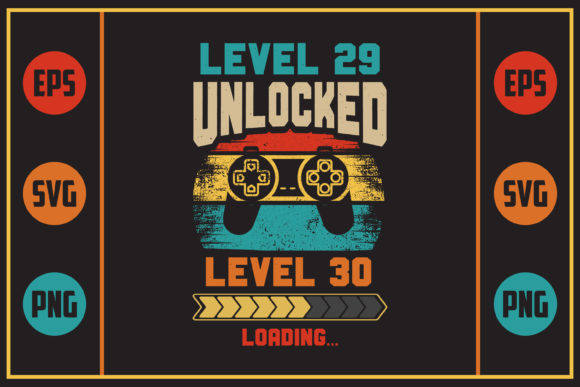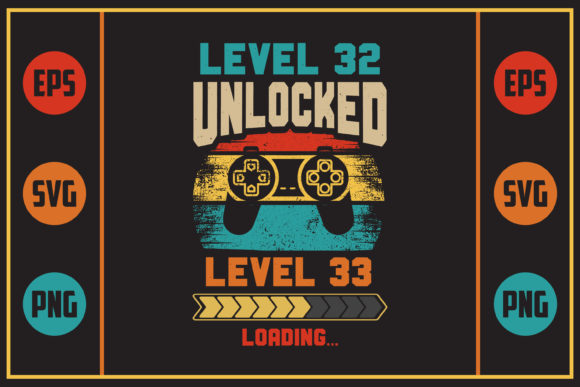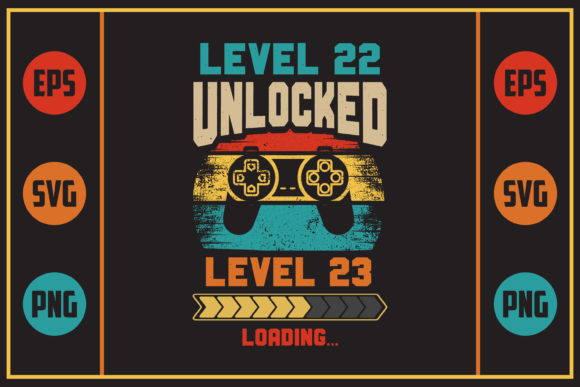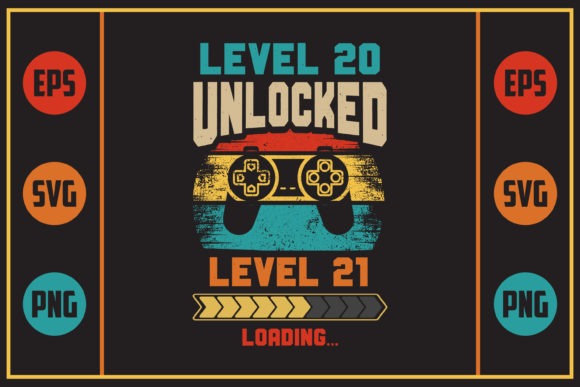
Gaming Retro Design - Level 8: A Designer’s Review
As an embroidery designer who spends more time staring at stitch maps than actual fabric, I have developed a keen eye for what works and what fails in the hoop. When I first pulled up Gaming Retro Design - Level 8, my immediate reaction was not just about the aesthetic appeal, but about its structural integrity. In the world of Crafts and digital Graphics, it is easy to find flashy images that look stunning on a screen but turn into a tangled mess of thread breaks and puckering on a garment. This review dives into the practical reality of using this design for real-world projects, from custom client orders to personal handmade gifts.
First Impressions and Visual Personality
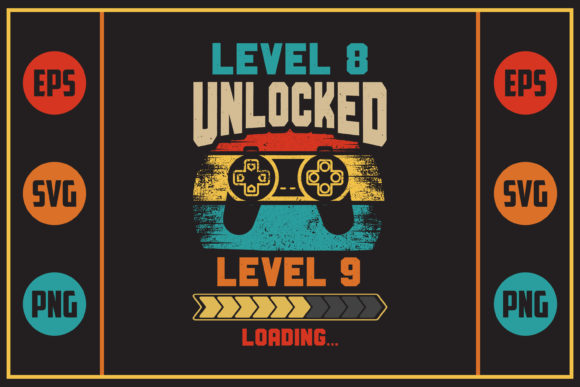
The mood of Gaming Retro Design - Level 8 is unmistakably nostalgic. It taps into that pixelated, 8-bit era that resonates with millennials and Gen Z alike. For an embroidery project, this presents both an opportunity and a challenge. Pixel art relies on sharp, blocky edges. In digital graphics, these are crisp. In embroidery, we are working with thread, which has volume and texture. The design’s layout suggests a bold, graphic statement rather than delicate shading. This makes it ideal for items where you want high visibility and instant recognition, such as a tote bag design or the back of a hoodie.
What stands out is the simplicity of the shapes. Complex gradients do not translate well to standard machine embroidery without excessive color changes or dense stitching that ruins the drape of the fabric. This design appears to respect those limitations, favoring solid blocks of color that can be effectively rendered with fill stitch or satin stitch techniques. It feels like a design made for impact, not just decoration.
Real-World Application: The Sweatshirt Test
To truly evaluate a design, you must imagine it stitched out. Let us consider a common scenario: a customer orders a custom sweatshirt embroidery piece for a gaming-themed birthday party. I envision placing Gaming Retro Design - Level 8 on the left chest of a heavyweight cotton fleece. Here, the design shines. The bold lines hold up well against the textured surface of the fleece. Because the design likely utilizes distinct color blocks, it avoids the "muddy" look that occurs when too many similar thread colors blend together on thick fabric.
However, if I were to apply this same design to a thin, stretchy jersey for a custom apparel line, I would proceed with caution. The weight of the stitching could cause the fabric to pucker, distorting the perfect square edges of the pixel art. In this case, the choice of stabilizer becomes critical. A cut-away stabilizer would be non-negotiable to maintain the shape of the finished product. For a rigid item like a canvas tote or a structured cap, the design would perform much more reliably without extensive reinforcement.
Navigating Fabric and Hoop Constraints
One of the most important aspects of reviewing any machine embroidery design is understanding where it should not be used. While Gaming Retro Design - Level 8 is versatile, it is not universal. If you are working with an embroidered patch on twill, the dense areas of the design need to be checked for stitch density. If the digital file has too many overlapping stitches in the small pixel details, you risk needle breaks and thread shredding.
Additionally, consider the hoop size. If this design is intended for a small 4x4 inch hoop, the tiny details might become lost or difficult to stitch cleanly. On curved surfaces like baseball caps, the distortion factor increases. The straight, geometric lines of retro gaming graphics can appear warped if the hooping technique is not precise. I always recommend testing the design on scrap fabric that matches your final material. This allows you to adjust tension and check if the thread colors provide enough contrast against the background.
Commercial Viability for Etsy Sellers
For Etsy sellers and owners of small shops, the commercial appeal of this design lies in its niche specificity. Gaming merchandise is a massive market. A well-executed holiday embroidery gift featuring this design could easily become a bestseller during the winter season. However, professionalism is key. Customers judge the quality of a handmade product by its finish. If the satin borders around the pixel blocks are uneven or if there are visible jumps threads, the perceived value drops immediately.
Using Gaming Retro Design - Level 8 in your craft business requires attention to presentation. When creating printable mockup images for your online store, ensure the digital representation matches the stitched reality. Misleading previews lead to returns and negative reviews. Since this is a digital embroidery file, you have the flexibility to resize it within reason, but always maintain the aspect ratio to keep the pixels square. Distorting the image will ruin the retro aesthetic.
Technical Notes and File Usage
It is crucial to note what you are actually purchasing. The product description states: WHAT YOU GET DIGITAL DOWNLOAD ONLY no physical product Your purchase includes one .zip file with the following 1 SVG file – For Cricut Explore, Silhouette Designer Edition, Adobe Suite, Inkscape, Core.
This is a vital distinction for embroidery designers. An SVG file is a vector graphic, typically used for cutting machines like Cricut or Silhouette, or for graphic design software. It is not a native machine embroidery file format such as PES, DST, or JEF. To use this for machine embroidery, you must import the SVG into embroidery digitizing software and convert it, ensuring you set the appropriate stitch types, underlay, and pull compensation. Alternatively, if you are using it for heat transfer vinyl (HTV) or sublimation on apparel, the SVG is ready to use. Always confirm the licensing terms before selling design assets or finished items derived from this file. If you are not a digitizer, you may need to hire one to convert this SVG into a stitch file suitable for your embroidery machine.
Final Verdict on Design Utility
Gaming Retro Design - Level 8 is a strong contender for projects that demand bold, graphic impact. It fits naturally into the categories of baby embroidery for nursery decor, personalized gift items for gamers, and boutique branding for tech-savvy audiences. Its strength lies in its clarity and thematic resonance. However, its success depends entirely on the executor’s ability to manage stitch density and fabric stability.
For those willing to put in the prep work—testing on scraps, choosing the right stabilizer, and verifying the conversion from SVG to stitch data—this design offers a reliable pathway to creating high-value small shop product listings. It is not just a graphic; it is a tool for storytelling through thread. Use it wisely, respect the materials, and it will elevate your commercial embroidery portfolio with a touch of playful nostalgia.